
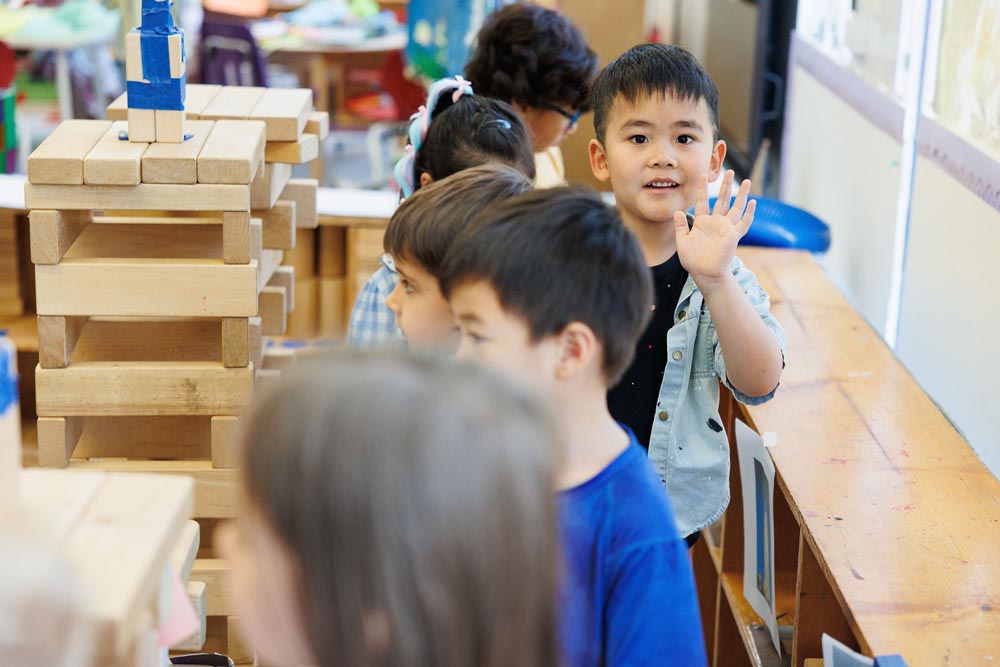
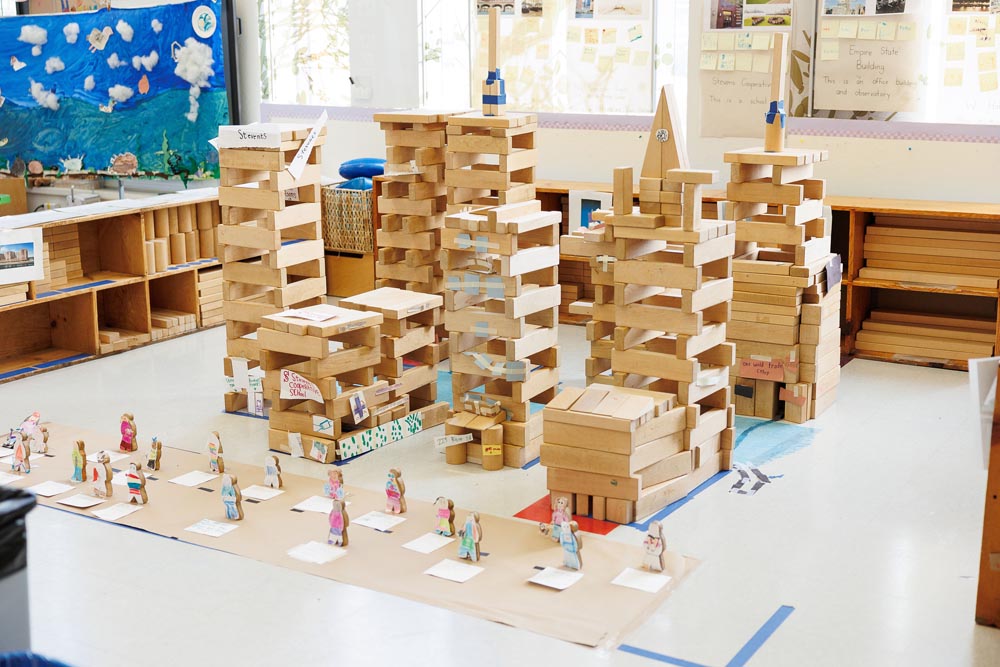
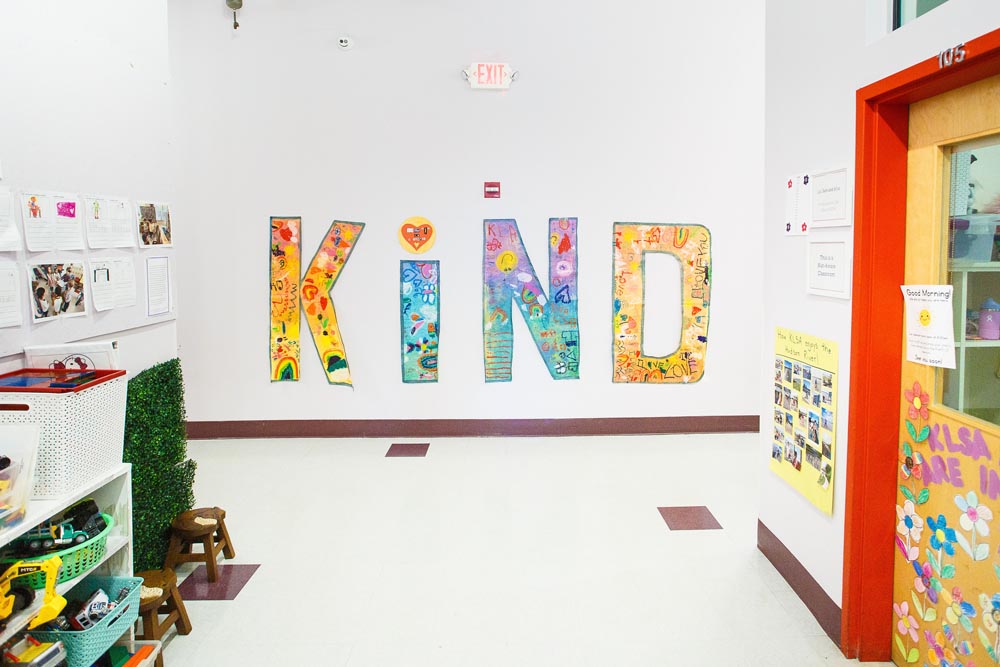
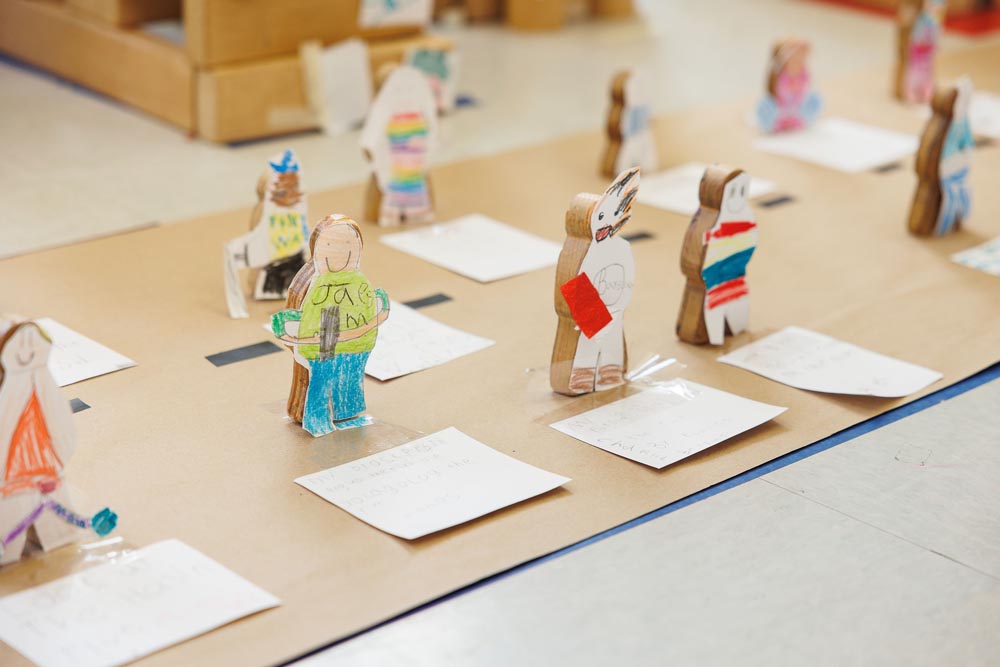
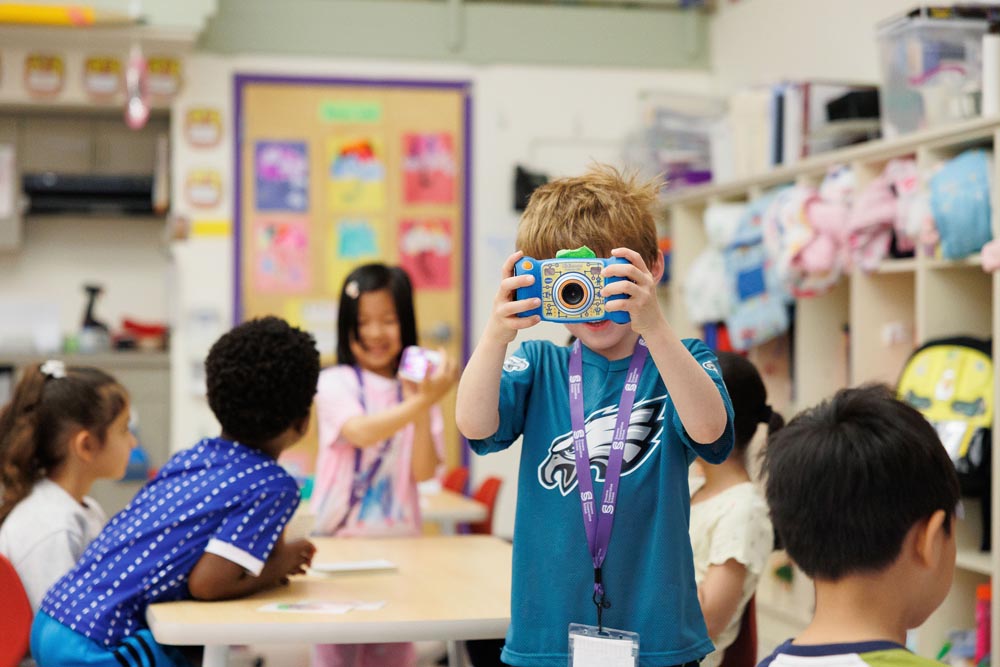
Students arrived, bubbling with excitement, high-fiving anyone in reach. Teachers were humming — most metaphorically, some literally — ready to dive into Hudson River ecology, building blocks, the rudiments of addition and whatever else young minds might want to know.
It was day 1, day 11, day 111 of school — it doesn’t matter — because this morning at Stevens was just like every other one, which is to say, the best one yet. We asked different people at Stevens why.

I love that the child is at the center of everything, and that’s what we all agree on. When we keep that at the center, it makes everything a lot easier. A young child learns through play, and every single opportunity that’s there is because of a teacher’s thoughtful planning and curriculum. It’s teaching and learning all the time.
If the class is really interested in birds, for example, my colleagues are amazing because they can adjust their curriculum on the fly. They incorporate everything — math, social studies, science, reading — and make it both interesting and meaningful to students. To have any child’s voice heard in that way is invaluable. Who would care to listen to these children? Stevens does.
The world needs independent thinkers who also know what’s kind. Independent, kind thinkers who will lead us to a better way. I feel like everything I do here is directly in service of that. I know these kids will do something great, and I’m honored to be a part of it.

C: I actually cried during our first parent-teacher conference at Stevens.
J: At our previous school, we really had to work to get information out of the teacher. It was like an interrogation. At Stevens, Leon’s teacher said, “Ok, there’s so much I want to share with you about your son.”
C: That friendliness and love that you could tell they were giving our kids, it was not what I expected, in a really great way.
J: I’ve never seen a faculty that puts so much time and effort and care into their jobs and the education of the kids they teach. Leon’s teachers know him not just by name, but by character. They really see him for who he is.
C: Right now in Kindergarten, they’re focused on the Hudson River. They’re learning about all the animals in it, riding the ferry to Manhattan, tying everything together in a real-world way.
J: It’s almost how you learn in college — in Kindergarten.

M: Stevens is very engaged with the students and the parents. We get regular, detailed newsletters from our children’s teachers, saying what’s going on, how kids are coping with the material. Being in the know provides peace of mind.
C: Because of my upbringing in Hong Kong, my view on education was very traditional. So I was surprised how involved parents could be at Stevens. You can see how Stevens teachers communicate with the kids, how they teach them to handle conflict and learn. From there, as a parent, you can try to implement those techniques in a similar way at home. That experience also helped us engage with other families in the class — I had this experience of knowing their kids, which led to engaging with their parents.
The more you’re involved, the more you’re actively learning as a parent, too.
*Not pictured.

After my daughter and I visited Stevens, her first question was “Is this a real school?” I asked her why she thought that, and she said, “Kids have so much freedom here.”
During the visit, she asked one of the teachers if they had rules at Stevens. The teacher responded, “Well, Emily, at Stevens, we decide as a class how we will treat one another. And once we’ve decided that, we all agree to it. So we follow the rules that we make for ourselves, as a group.” At that moment, my heart just melted, and I knew we had to be at this school.
It’s probably going to be the best investment in a kid’s future: a Stevens education. I think we now understand that our personality is built at a young age, and school has a huge influence. The academic level is important, but what really matters is that you know how to build relationships.

T: The decision to pick Stevens, for us, was really because we wanted something more structured than daycare. PreK 3 at a proper school gives you more structure. It’s comfortable yet authoritative; they know they need to respect their teachers, but there’s also a level of comfort where they can get a hug — a balance of structure and comfort.
S: It also gives you more opportunities. Stevens has great afterschool programs, too. We love them because it’s one less layer of transportation logistics you have to work out as a parent. Our daughters have done programs like debate duels, ceramics and scratch building. It’s not just tennis or soccer.
T: I often tell other parents, the reason Stevens has survived for 75 years is that they’ve been doing something right. It’s good to send your kids to a place that has this massive history, a place that really knows what they’re doing.

Stevens gives us, as teachers, the opportunity to take what children are interested in and create curriculum around that. We have learning goals and standards, but the way we get there is different every year. That takes years of practice as a teacher, but that’s where we find the magic.
A few years ago, we had these massive cardboard boxes in the classroom. We voted about what we were going to do with the boxes. They’re three, and they learned how to vote!
They all became vehicles, so then we did a deep dive on that — learning about why we need fire trucks and how rocket ships work. They’re introduced to vocabulary and concepts that can only come from teachers with experience and passion. It’s not just cute or a fun little thing to me. It’s real work they’ve been doing; it’s real thinking. We’re educators, not just caretakers.


